
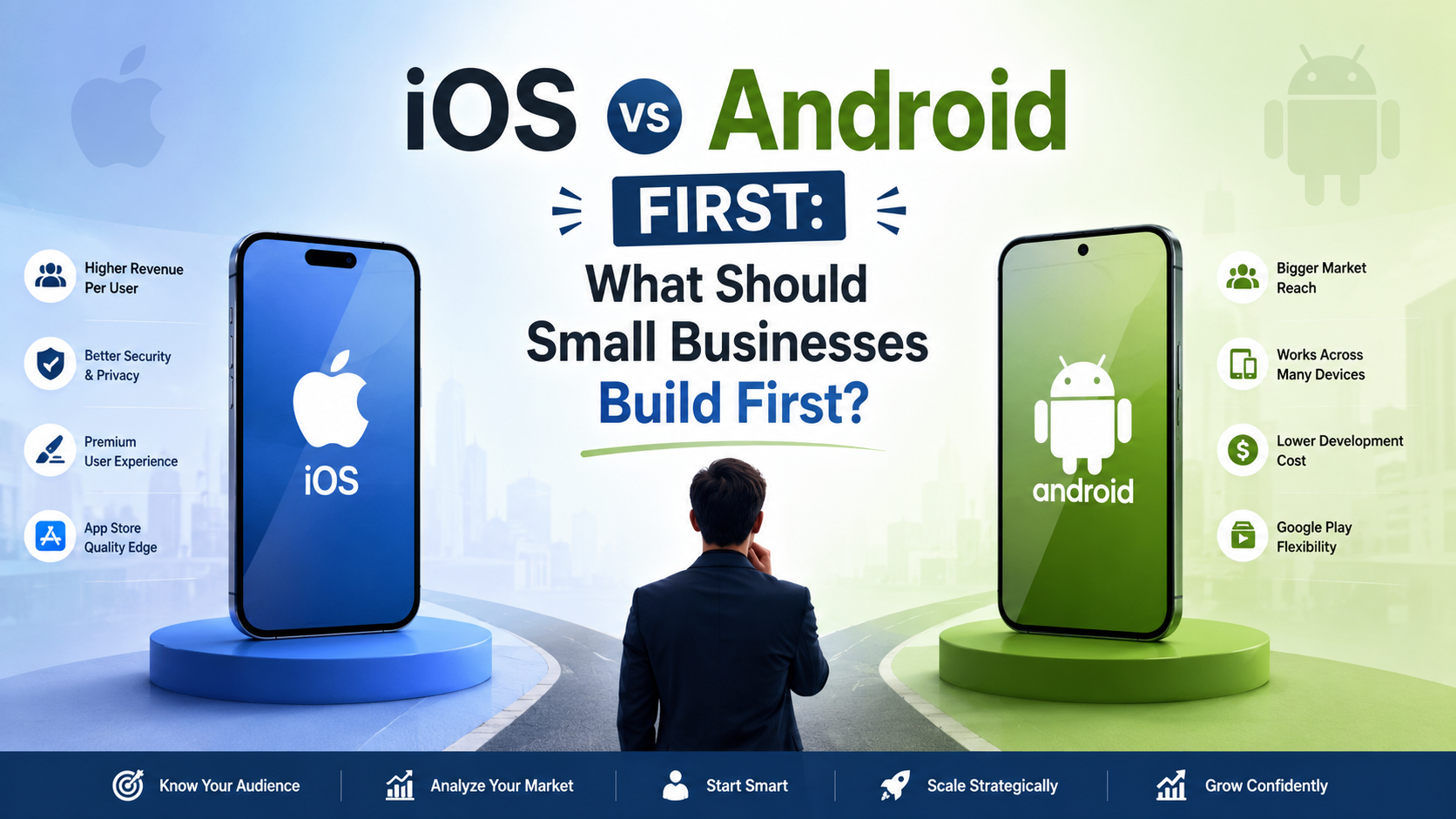
If you’re planning your first mobile app, one of the biggest questions you’ll face is iOS vs Android first. Launching on both platforms sounds ideal, but for many small businesses, budget and development timelines make that difficult.
The good news is that you don’t always need to build for both platforms at once. Choosing the right platform first depends on your customers, business goals, budget, and long-term strategy—not simply which operating system is more popular.
Why Choosing the Right Platform Matters
Building a mobile app is an investment. Every feature, integration, and design decision affects both cost and development time.
That’s why deciding iOS vs Android first should be based on business needs rather than assumptions.
Ask yourself:
- Who are your customers?
- What devices do they use most often?
- Is your app customer-facing or for internal business use?
- How quickly do you need to launch?
- What is your development budget?
Answering these questions will usually provide a clearer direction than comparing operating systems alone.
Which Platform to Build App First?
If you’re wondering which platform to build app first, start by looking at your audience instead of the technology.
For example:
Consider iOS First If:
- Most customers use iPhones.
- Your audience includes professionals or premium consumers.
- You’re launching an MVP to test a business idea.
- You want to begin with one platform before expanding.
Consider Android First If:
- Your customers use a wide range of devices.
- Your business serves broader consumer markets.
- Device compatibility is important.
- Your customer base relies heavily on Android phones.
Rather than asking which platform is objectively better, determine which platform to build app first based on who will actually use your application.
iOS vs Android: A Simple Comparison
| Feature | iOS | Android |
| Device Variety | Limited | Wide range |
| Development Testing | Generally simpler | Often more extensive |
| App Distribution | Apple App Store | Google Play Store |
| Hardware Consistency | High | Varies by manufacturer |
| Audience | Depends on market | Depends on market |
Neither platform is universally better. The right choice depends on your specific business requirements.
Native App Development Choice: Should You Build Two Separate Apps?
Another important decision is your native app development choice.
Native development means building apps specifically for each platform.
Advantages include:
- Better performance
- Access to device-specific features
- Optimized user experience
- Platform-specific design standards
However, separate development projects may increase both cost and development time.
For some businesses, launching on one platform first and expanding later is a practical way to manage investment while gathering customer feedback.
Your native app development choice should reflect your business priorities, not simply technical preferences.
iOS or Android for Startups: Where Should New Businesses Begin?
For founders launching a new product, iOS or Android for startups is often a budget decision as much as a technical one.
Imagine a startup building an ecommerce loyalty app.
The company has a limited budget and wants to validate customer interest before expanding.
Instead of building two complete applications immediately, they launch on one platform where most of their existing customers are active. After gathering feedback and refining features, they expand to the second platform.
This phased approach allows the business to reduce initial costs while learning from real user behavior.
For many entrepreneurs, iOS or Android for startups is less about choosing the “right” operating system and more about choosing the right launch strategy.
Cost Comparison: One Platform vs Both
Budget often influences the decision more than technology.
Here’s a simplified comparison:
| Development Strategy | Typical Scope |
| Single Platform | Lower initial investment, faster launch |
| Both Platforms Simultaneously | Broader audience, higher upfront investment |
Choosing one platform first can also simplify:
- Testing
- Customer feedback
- Feature improvements
- Bug fixes
- Future updates
Once the app proves valuable, expanding to another platform often becomes easier and more predictable.
Questions to Ask Before You Decide
Before making your iOS vs Android first decision, consider:
- Which devices do my customers use?
- Is speed to market important?
- What is my available budget?
- Will employees or customers use the app?
- Do I expect frequent feature updates?
- Am I building a long-term digital product?
These questions usually provide better guidance than focusing only on market share or industry trends.
How ZM Collab Helps Businesses Choose the Right Platform
Choosing the first platform is only one part of building a successful mobile app.
ZM Collab works with businesses to evaluate customer needs, business goals, and technical requirements before development begins. Whether launching on iOS, Android, or planning for both, each project is designed around practical business objectives rather than unnecessary complexity.
For companies that also require ecommerce integration, automation, or custom web applications, mobile apps can become part of a connected digital ecosystem that supports future growth.
Final Thoughts
There isn’t a universal answer to iOS vs Android first.
The best decision depends on your customers, budget, launch strategy, and long-term goals. Many successful businesses begin with one platform, gather customer feedback, and expand once they better understand how people use their app.
By focusing on customer needs instead of trying to launch everywhere at once, you can make a more informed investment and reduce unnecessary development costs.
If you’re planning your first business app, visit ZM Collab’s Mobile App Development page to explore a solution tailored to your business goals.
Image Alt Text Suggestions
- iOS vs Android first comparison for small business mobile app development
- Business owner deciding which platform to build app first
- Mobile app planning guide comparing iOS or Android for startups
Internal Linking Suggestions
- Custom mobile app development services → Mobile App Development
- Custom web application development → Custom Web Apps
- Ecommerce solutions for online businesses → Ecommerce Services
- Business automation and AI workflow solutions → Automation Services
FAQ
Should I build for iOS or Android first?
The answer depends on your target audience, budget, and business goals. If most of your customers use one platform, launching there first can help reduce development costs while allowing you to gather valuable user feedback before expanding.
Which platform should I build my app for first?
When deciding which platform to build app first, consider where your customers are most active, how quickly you want to launch, and your available budget. A data-driven decision is usually more effective than choosing based on popularity alone.
Is native app development the right choice for small businesses?
A native app development choice can provide strong performance, smoother user experiences, and better access to device features. However, it may require separate development for iOS and Android, making it important to balance performance needs with available resources.
Is iOS or Android better for startups?
The choice between iOS or Android for startups depends on your target market and launch strategy. Many startups begin with one platform to validate their idea, improve the product through customer feedback, and then expand to the second platform as the business grows.